Global Science University

.

.

Case Report: Failure to Thrive and Chronic Constipation in a 4-Month-Old Infant, Suspected Hirschsprung Disease.

Case Presentation

A 4-month-old male infant was brought to the hospital with a history of poor weight gain since birth. The condition was progressive, with no period of normal growth.

The mother reported chronic constipation, with the infant passing stool every two days in small, hard pellets. There was a history suggestive of delayed passage of meconium after birth. The infant also developed abdominal distension and fever, with no history of vomiting. Feeding was reported to be normal.

There was no prior history of hospitalization, surgery, or known medical illness. Family history was unremarkable for congenital disorders.

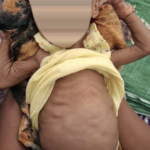
On examination, the infant appeared lethargic and severely malnourished. Anthropometric assessment showed a weight of 3.2 kg with a Z-score below -3, consistent with severe acute malnutrition.

Vital signs were as follows: temperature 38°C, pulse rate 134 beats per minute, and respiratory rate 50 breaths per minute.

Abdominal examination revealed distension, tympanic percussion note, and hypoactive bowel sounds.

Digital rectal examination demonstrated a tight anal sphincter, empty rectum, and explosive passage of stool following withdrawal, findings suggestive of distal bowel obstruction.


Investigations

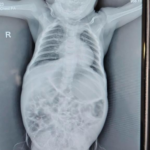
  • Abdominal X-ray: Marked gaseous distension with dilated bowel loops
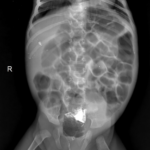
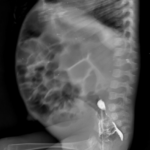
  • Contrast enema: Suggestive of a transitional zone
  • Complete blood count: No significant abnormalities
  • Rectal biopsy (gold standard): Planned but not yet performed

Diagnosis

Based on clinical findings and imaging, the case is highly suggestive of
Hirschsprung Disease.

Management (Current and Planned)

Current Management

The patient is currently receiving supportive care, including:

  • Intravenous fluids
  • Regular rectal irrigation
  • Monitoring of vital signs and abdominal distension
  • Antibiotic therapy
  • Nutritional rehabilitation for severe malnutrition

Planned Management

Definitive surgical management has been postponed due to severe malnutrition. The patient is currently undergoing nutritional optimization to improve general condition and surgical fitness.

Once the patient’s nutritional status improves, confirmatory rectal biopsy and definitive surgical intervention (pull-through procedure) will be performed.

Discussion

Discussion

This case highlights a probable diagnosis of Hirschsprung Disease presenting with failure to thrive and chronic constipation.

Although the condition typically presents in the neonatal period, delayed diagnosis can occur, particularly in low-resource settings or when symptoms are initially misinterpreted as functional constipation.

Key clinical indicators in this case include:

  • Delayed passage of meconium
  • Persistent constipation since birth
  • Abdominal distension
  • Characteristic findings on digital rectal examination

Severe malnutrition in this patient contributed to the delay in definitive surgical management, highlighting the importance of nutritional optimization before operative intervention.

Conclusion

Hirschsprung Disease should be considered in any infant presenting with chronic constipation, abdominal distension, and poor growth. Early recognition and appropriate supportive management are essential to prevent complications and prepare patients for definitive surgical treatment.

Status

The patient is currently under follow-up, with further diagnostic confirmation and surgical management planned after nutritional stabilization.

Disclaimer

This case is shared for educational purposes only. All identifying patient information has been removed to ensure confidentiality.

Presented by: Year 4 Medical Students
Faculty of Medicine and Surgery

#CaseOfTheWeek #MedicalEducation #ClinicalLearning